
Building thoughtfully with natural materials.
Timber can store biogenic carbon during its use phase and offers design potential for efficient building envelopes. Project-specific performance and sourcing must always be verified.
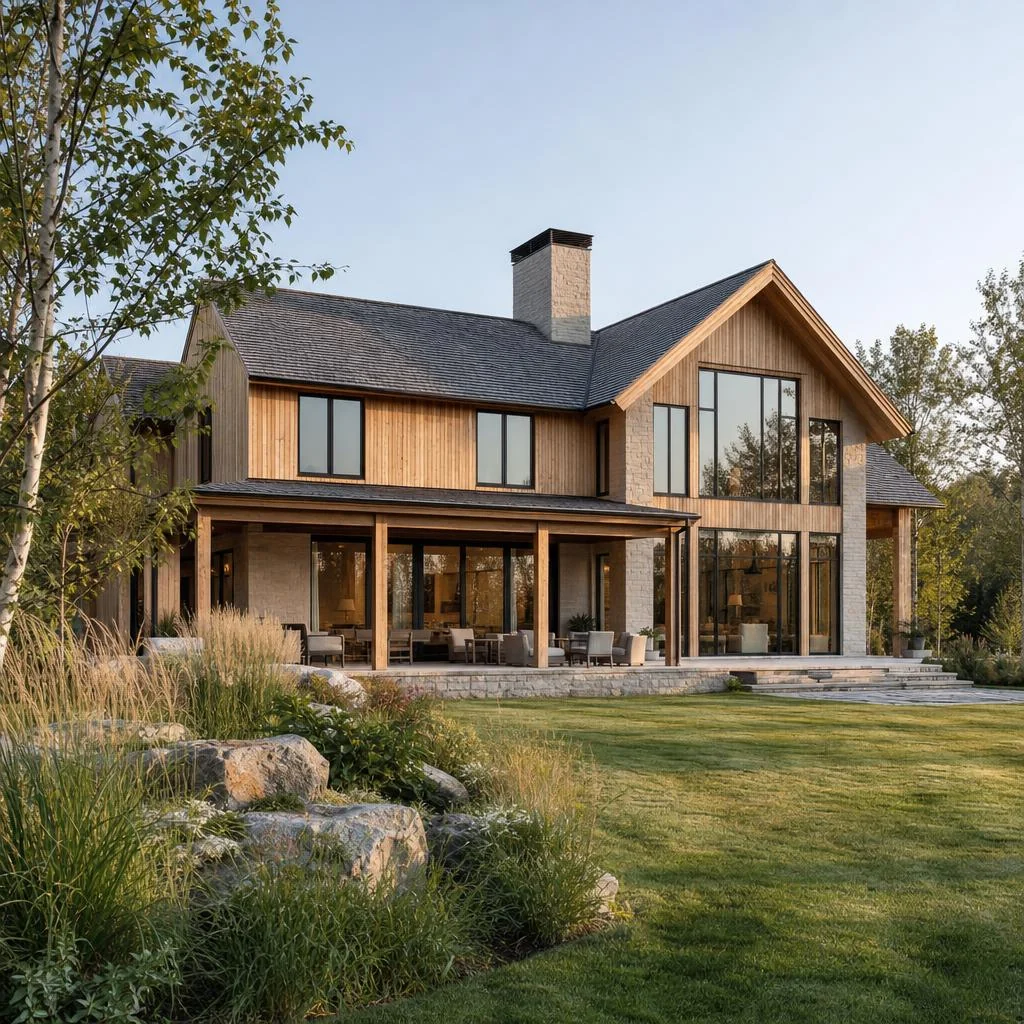
Material responsibility
Responsible focus
We prioritize natural materials and seek suppliers with transparent, responsible practices. Specific origins and certifications are only stated after verification.
Long-term use
Durable design, repairability and considered material use can extend a building’s useful life.
Potential advantages
Detailed envelope
Careful junction planning can reduce thermal bridges and unwanted air leakage.
Comfort planning
Insulation, ventilation and moisture design are coordinated for each climate and project.
Energy-conscious operation
The building envelope can be planned for efficient heating and cooling. Actual performance depends on design, systems, use, climate and verified calculations.
Learn how we plan and buildFrequently asked questions
Clear answers for planning your timber-home project.
What makes a material choice responsible?
Use verified project data: function, source, service life, maintenance, repairability and end-of-life options. Wood alone does not prove the impact of a whole building.
How is operational energy considered?
Reduce demand through the envelope and form, then size ventilation, heating and renewable systems from project-specific calculations.
What is a useful next step?
Set measurable project priorities, request evidence for the actual products and systems, and compare impacts over the relevant life cycle.
Ready to discuss your planning questions?
Share your destination market, topic and timeframe.